Last Update: "February 2, 2012"
*******************************************************************
 

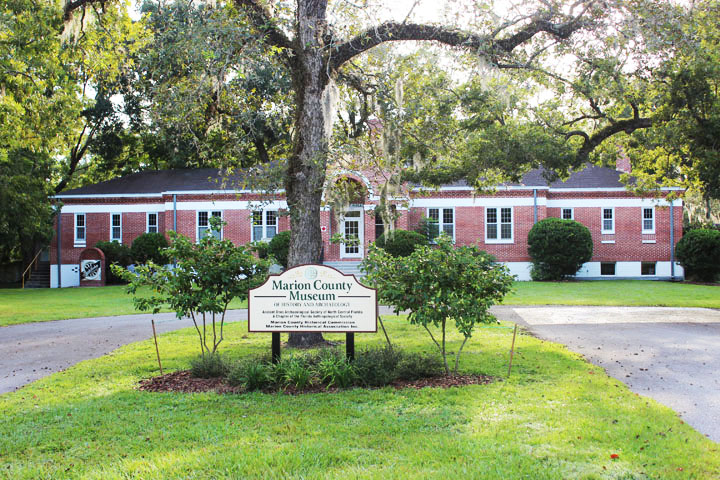
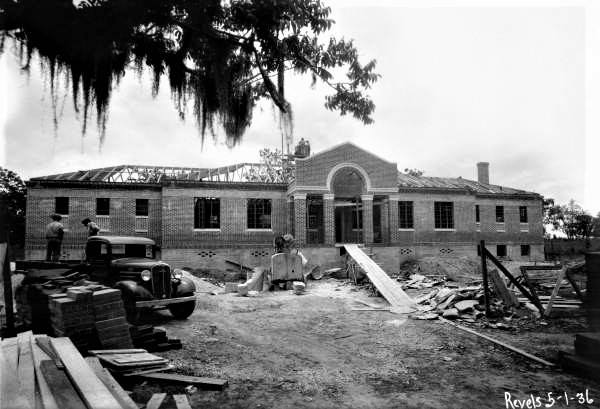
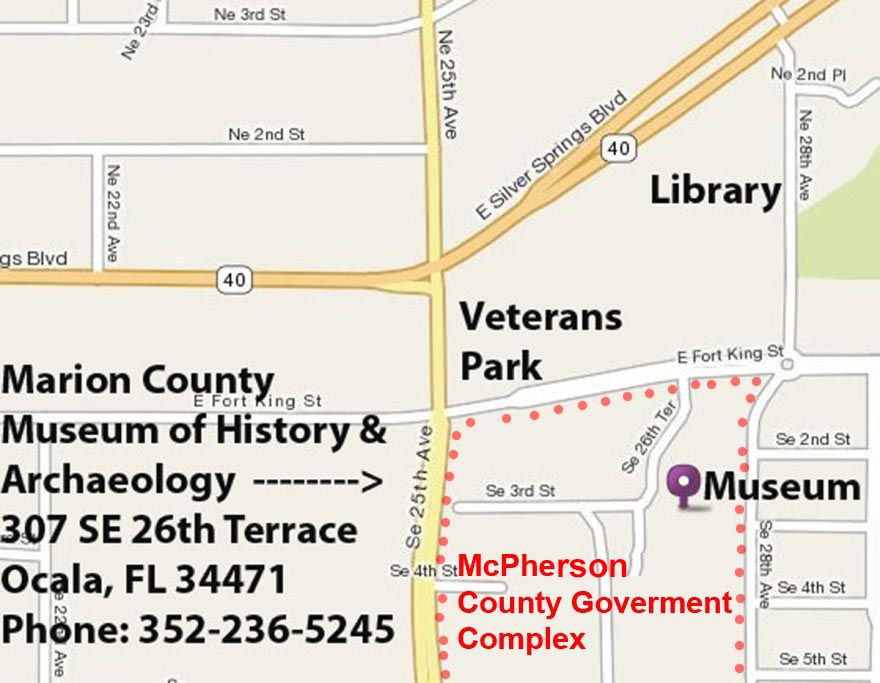
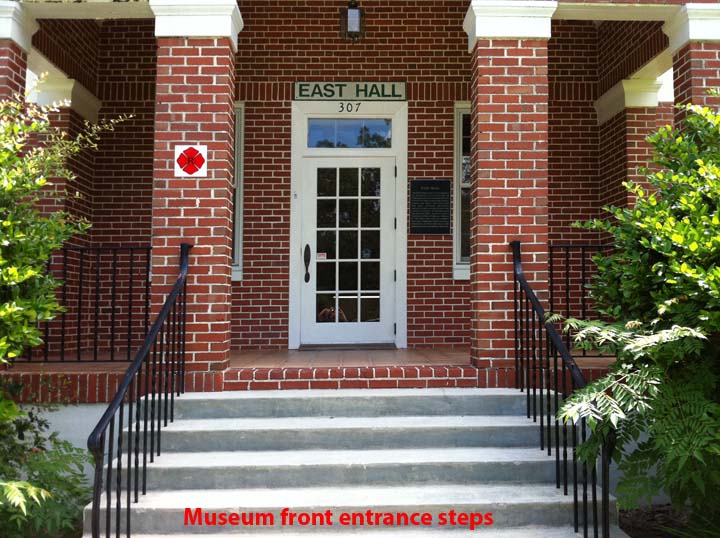
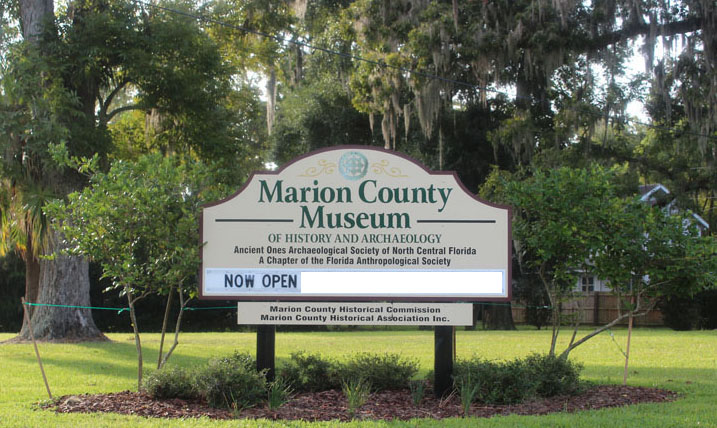
Welcome to our website!  The Marion County Museum of History and Archaeology is a research and teaching institution located at 307 S.E. 26th Terrace, Ocala, Florida, on the McPherson Governmental Complex.

Our displays, exhibits and programs cover 13,000 years of human history in this wonderful area.  Our Museum’s Grand Opening was on September 18th, 2011.

Our field programs in archaeology allow students, residents and members of the general public to “write their own history” by discovering parts of our region’s incredible past. 

If you’ve ever wanted to try doing archaeology in the field – this is your chance!

Thank you for your interest in our area’s wonderful history and heritage!

""New""

You can listen to Dr. Willet Boyer from 3:30 to 4:30 PM every other Friday Afternoon on the Buddy Martin’s radio show on 96.7 FM or 1370 AM.   He with talk about the latest finds from the Archaeological Digs in Marion County and news on what is happening at the Museum including the monthly lectures.


You can also see Dr. Willet Boyer on a live web cam on the internet at the Radio Station Web Page:    WOCA.com

You can see the most recent artifacts found in Marion County on your computer .


If you miss the live show you can look up on the above web page and open a free ustream.tv account and watch the show you missed.

Video of Dr. Boyer on the Buddy Martin Show Jan 20, 2012:

http://www.ustream.tv/recorded/19889951


1.      Log into the web page above

2.      Sign up for a free ustream account

3.      Click back on the web page above

4.      Wait until Willet is on – about 15 minutes I think on the Friday 1/20/2012 show.  You may have to listen to the commercials and some news in between his talk.


There are thirteen planned separate exhibits (in addition to special site displays) that will outline the complete scope of human history for the area that is now Marion County, Florida.  They will be consistent, logically flowing, and presents each time period in the region’s prehistory and history as a complete, unbroken sequence; and is easily understandable and accessible both to students of history and archaeology and to the general public.  The format for the redesigned interior of the Museum is based on a “timeline” format, beginning with the earliest periods of human prehistory and continuing through the later periods and through the historic era.  This timeline will contain a series of panels/exhibits which will focus on a specific era within the timeline.  The proposed panels/exhibits for the complete timeline are as follows:

1) Paleoindian (ca. 13,000 years before present – 9,500 y.b.p. [years before present]) – This panel/exhibit will show the lifeways of the Paleoindian cultures of this region, artifacts from this period, and a map showing Paleoindian sites within the Marion County area.

2) Early/Middle Archaic (9,500 y.b.p. – 4,500 y.b.p.) – This panel/exhibit will show the lifeways of the Early and Middle Archaic cultures of this region, artifacts from this period, and a map showing Early and Middle Archaic sites and settlement patterns within the Marion County area.

3) Late Archaic (4,500 y.b.p. – 3,000 y.b.p.) – This panel/exhibit will show the lifeways of the Late Archaic peoples of this region, focusing especially on the development of pottery (a time marker for the beginning of the Late Archaic), artifacts from this period, and a map showing Late Archaic sites and settlement patterns within the Marion County area.

4) St. Johns I/Deptford/Weeden Island cultures (3,000 y.b.p. – 800 A.D.) – This panel/exhibit will show the lifeways of the cultural groups which fell within the St. Johns, Deptford, and Weeden Island (Cades Pond) cultures of Marion County, including maps showing the areas where each of these ceramic cultures and types predominate.  It will include artifacts from each of these different cultures, and explain what we know of each group’s lifeways and beliefs.

5) St. Johns II/Alachua/Safety Harbor (800 A.D. – 1539 A.D.)This panel/exhibit will show the lifeways of the latest pre-contact cultures in what is now Marion County: the St. Johns II, Alachua, and Safety Harbor peoples, including maps showing the areas where each of these ceramic cultures and types predominate.  It will include artifacts from each of these different cultures, and will explain what we know of each group’s lifeways and beliefs.

6) CONTACT/EARLY SETTLEMENT (1539 A.D. – 1597 A.D.) -  This panel will describe the Timucuan chiefdoms which inhabited the Marion County region at the time of European contact here: the Ocale, the Acuera, and a part of the Potano.  It will discuss the first European contact with the native peoples in this area – the Hernando de Soto entrada, which passed through this region in 1539 A.D. – and what we know of the interactions between the Timucuan Indians of this region and French and Spanish explorers and settlers through the beginning of the mission period in 1597 A.D.

7) SPANISH MISSION PERIOD (1539 A.D. – 1702 A.D.)This panel will describe the era of the Spanish mission settlements in what is now Marion County, and will tell what we know of each mission, including the recently discovered site of Santa Lucia de Acuera.  It will describe the ways in which the missions in this area affected the native peoples here, show a map of the areas the missions are believed to have been located, and the ways in which the Acuera and Ocale responded to Spanish missionization.

8) COLONIAL CONFLICT/SEMINOLE ETHNOGENESIS PERIOD (1702 A.D. – 1763 A.D.) – This panel will describe the ways in which the peoples of the Marion County region were affected by the colonial wars between Spain, France, and England, including the destruction of the original Timucuan chiefdoms which inhabited this region.  It will also describe what we know of the beginnings of the Seminole Indian culture in this area between the 1740’s and 1763.

9) BRITISH/SECOND SPANISH PERIOD (1763 A.D. – 1821 A.D.) This panel will describe the period of British rule of Florida (1763 A.D. – 1784 A.D.) and the Second Spanish Period (1784 A.D. – 1821 A.D.), and the growth and expansion of the Seminole Indians in this area.  Focuses in this display will include the areas within Marion County described by William Bartram, as well as a map showing Spanish land grants in the region which were issued during the Second Spanish Period.

10) AMERICAN TERRITORIAL/SECOND SEMINOLE WAR (1821 A.D. – 1845 A.D.)This panel will describe the period during which Florida was a territory of the United States, after its purchase from Spain in 1821.  Included will be U.S. Army maps of Marion County during the 1820’s and 1830’s, showing the forts such as Fort King and Fort Drane, which were the original settlements for modern cities in Marion County.  This area will include displays about the Second Seminole War, the formation of Marion County as a county, and the admission of Florida as a State in the United States in 1845.

11) MARION COUNTY: 19th CENTURY STATEHOOD (1845 A.D. – 1900 A.D.)This panel will include information about the 19th century history of Marion County after its admission to the United States, and will include information on American settlement in the region, the Civil War and its aftermath, and the “boom times” of the later 19th century, including the “riverboat era” of tourism and travel.  Maps showing the growth of Marion County and the settlements from this period will be included.

12) MARION COUNTY: TURN OF THE 20th CENTURY – WORLD WAR II (1901 A.D. – 1945 A.D.)This panel will discuss the effects of the original Florida “land boom” and the Depression, and will discuss the role Marion County and its citizens played during World War II.  It will include discussion of the rise of agriculture and tourism in the region and other topics related to early 20th century history in the area.

13) MARION COUNTY: 1945 – PresentThe final panel will present Marion County’s history through the present day, including the County’s growth after World War II, the role of Silver Springs and other natural wonders in attracting people as tourists in the region, and trends in the County’s growth and future as we begin the second decade of the 21st century.

Each of the “panel” exhibits will be accompanied by free-standing exhibits of artifacts and documents, both pre-contact and historic, which will further illuminate people’s activities and lifeways in each of the different time periods described.  It is intended that these free-standing exhibits will be “rotating” exhibits, which are intended to display specific types of artifacts and other historic material which will allow for many collections from individuals and organizations to be displayed for periods of time – and then “rotated” to allow new collections, also from the same period, to be displayed.   In this way, the exhibits will be constantly changing while consistently displaying the historic timeline of human settlement in the Marion County area.  This will both stimulate interest in collections at the Museum and will also allow for a much broader range of participation in creating Museum collections by groups and individuals throughout the area and elsewhere.

Currently the museum has only one (#6 CONTACT/EARLY SETTLEMENT (1539 A.D. – 1597 A.D.)) of the 13 Time Period display panels set up with limited artifacts .  The museum is actively looking for donations of money to build displays and artifacts to display from each time period from local residents and businesses.


The museum is currently logging in artifacts from the following collections for use in its “Time Period” and “Special” displays. 

Items marked * are currently set up in the museum.


1.      Henderson Collection *              269 Indian Artifacts from Silver Glen Springs found in the 1930s

2.      Corsiglia Collection *                 148 Indian Artifacts from Ocala found near the Museum in the early 1960s

3.      Seminole Blouses *                    6 Colorful shirts made by local Seminole Indians

4.      Jon Fort Collection                    111 Pottery Artifacts found all over Marion County

5.      Hutto Martin Site *                     122 Artifacts (many more) found near Moss Bluff

6.      Lake Weir/Hart Acres Site       Indian Artifacts  found Moss Bluff                  

7.      Ancient Hills Site                       Indian Artifacts and later time period artifacts found just South of the Ocala Airport

8.      Fort King Site                            Artifacts f ound at the Fort King Site in East Ocala

9.   Paddock Park *                           Indian Artifacts f ound near the Paddock Mall

10.  Scrambletown Items*            Artifacts from Scrambletown and a model homestead

11.   Thomas Collection *                   Early farm tools from the area

    Many more collections have not yet started the logging in/displaying layout process.

Programs for Public Education are being developed for all to take part understanding our history.

1) Archaeological Field School/Support Classes

2) Guided Public Tours/Student Educational Tours 

3) Lecture Series on History and Archaeology

4) “In-Museum” Classes and Volunteer Opportunities

5) Trading Skills with the Members of the Ocala Metal Detectors Club.

Last year a Boy Scout weekend camp-out was held where all were taught how an Archaeological Dig is performed and given a chance to dig and shake the shifting screen to actually find artifacts near Moss Bluff.   This year two Boy Scout came to the Museum and lectured by Dr. Willet Boyer about Florida History and Archaeology so they could earn a Merit Badge.

Last year and this year students from Central Florida College took Archaeology Courses taught by Dr. Willet Boyer and took part in several dig sites around Marion County for about 10 months. Many of them are making plans to become Archaeologists.

The Mid Florida Historical Research & Recovery Association helped find early settlers buried metal artifacts at the Ancient Hills dig site and then were taught the way Archaeologist perform a unit dig with all required documentation.


*************************************************************************************

The county is supplying the building and much of the utilities/maintenance, but many expenses and cost for the displays will be from local donations.  Donations can be made to The Marion County Historical Association (a 501-c(3) Corporation- any donation is tax deductible).


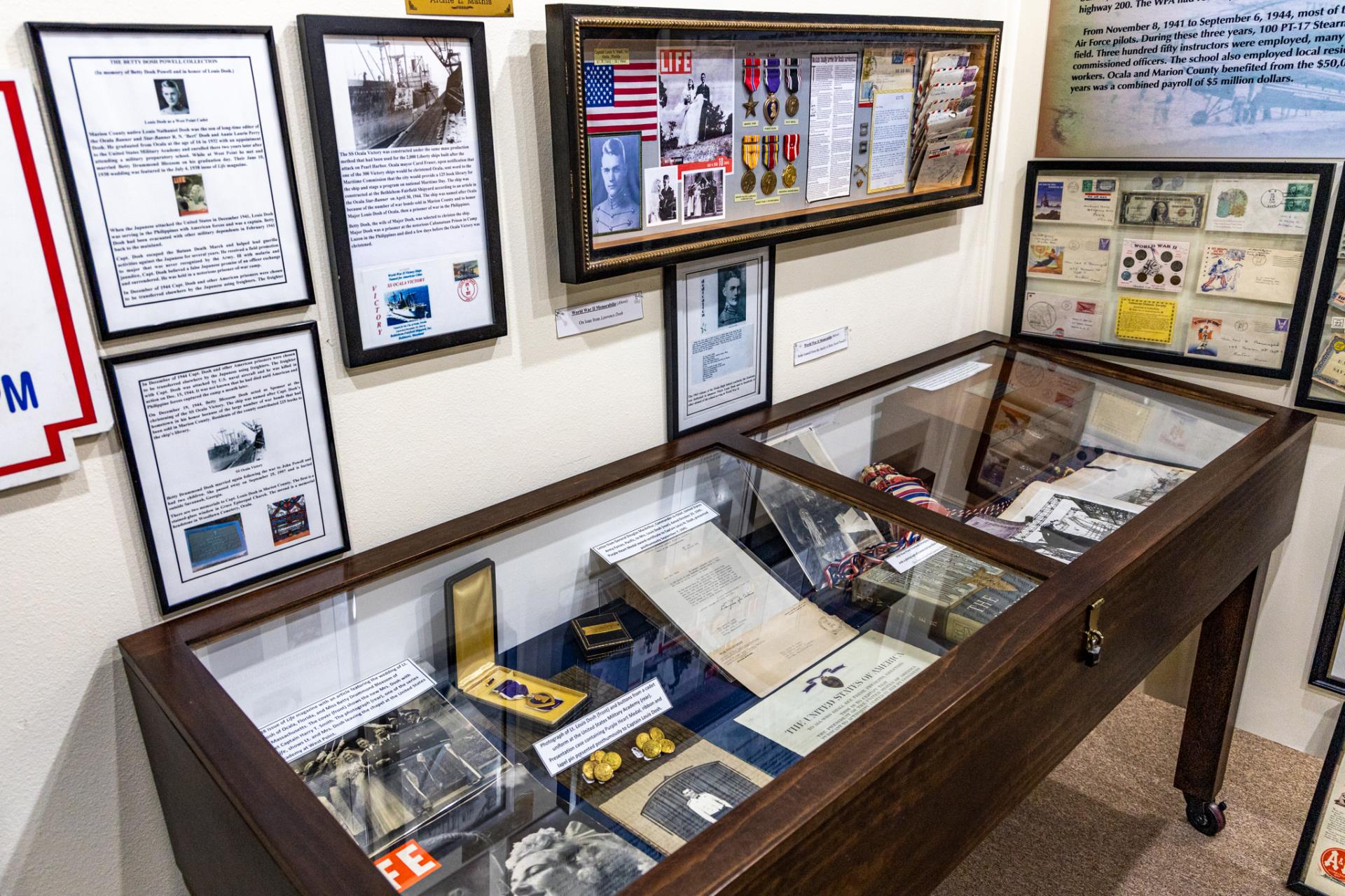
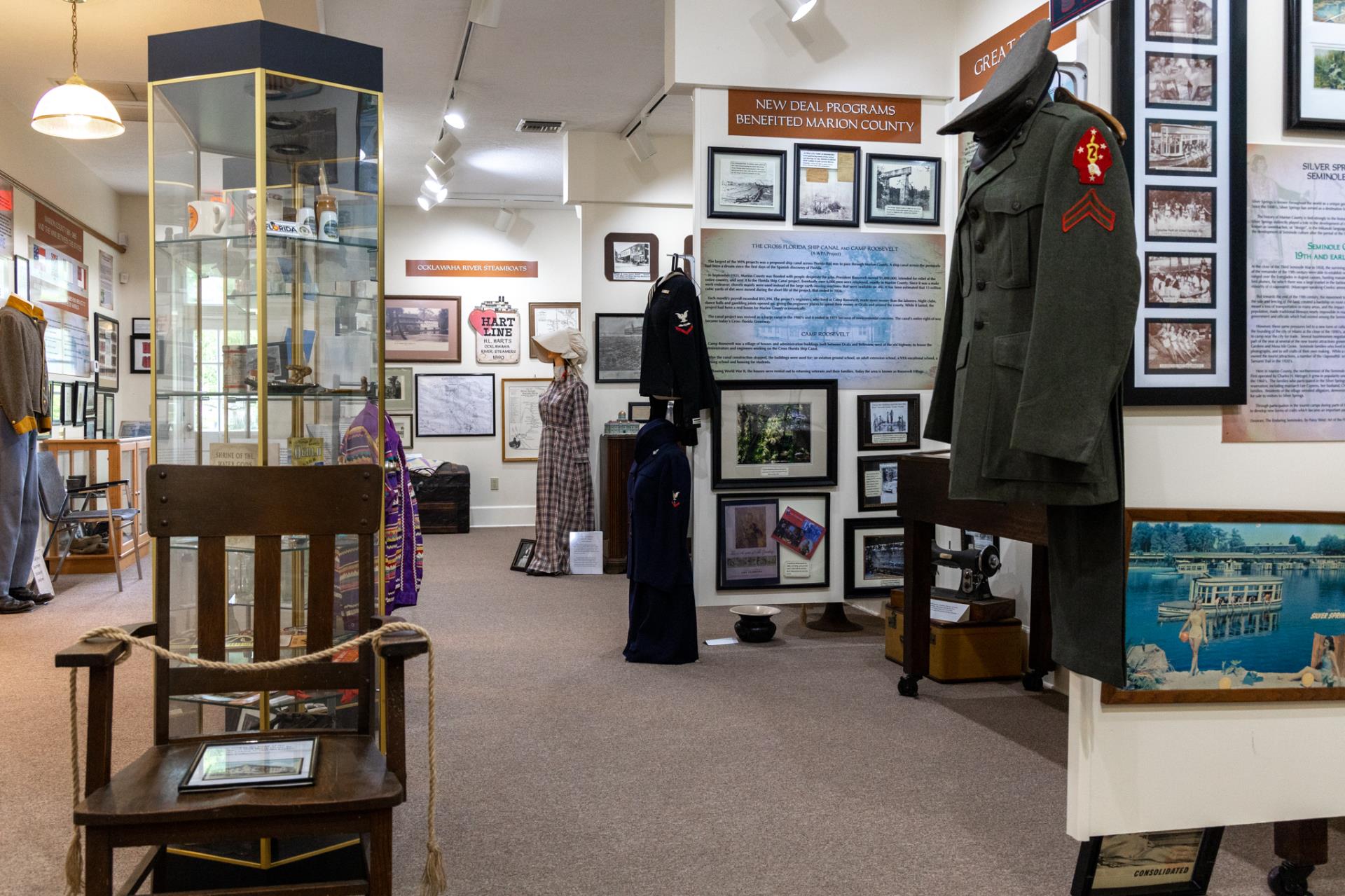
A "QUICK LOOK" inside the Museum of pictures taken on September 22, 2011.  These pictures do not show all displays or detail with in them. 


 Click:  http://marioncountyarchaeology.com/mcmha/pictures.htm


*****************************************************************************
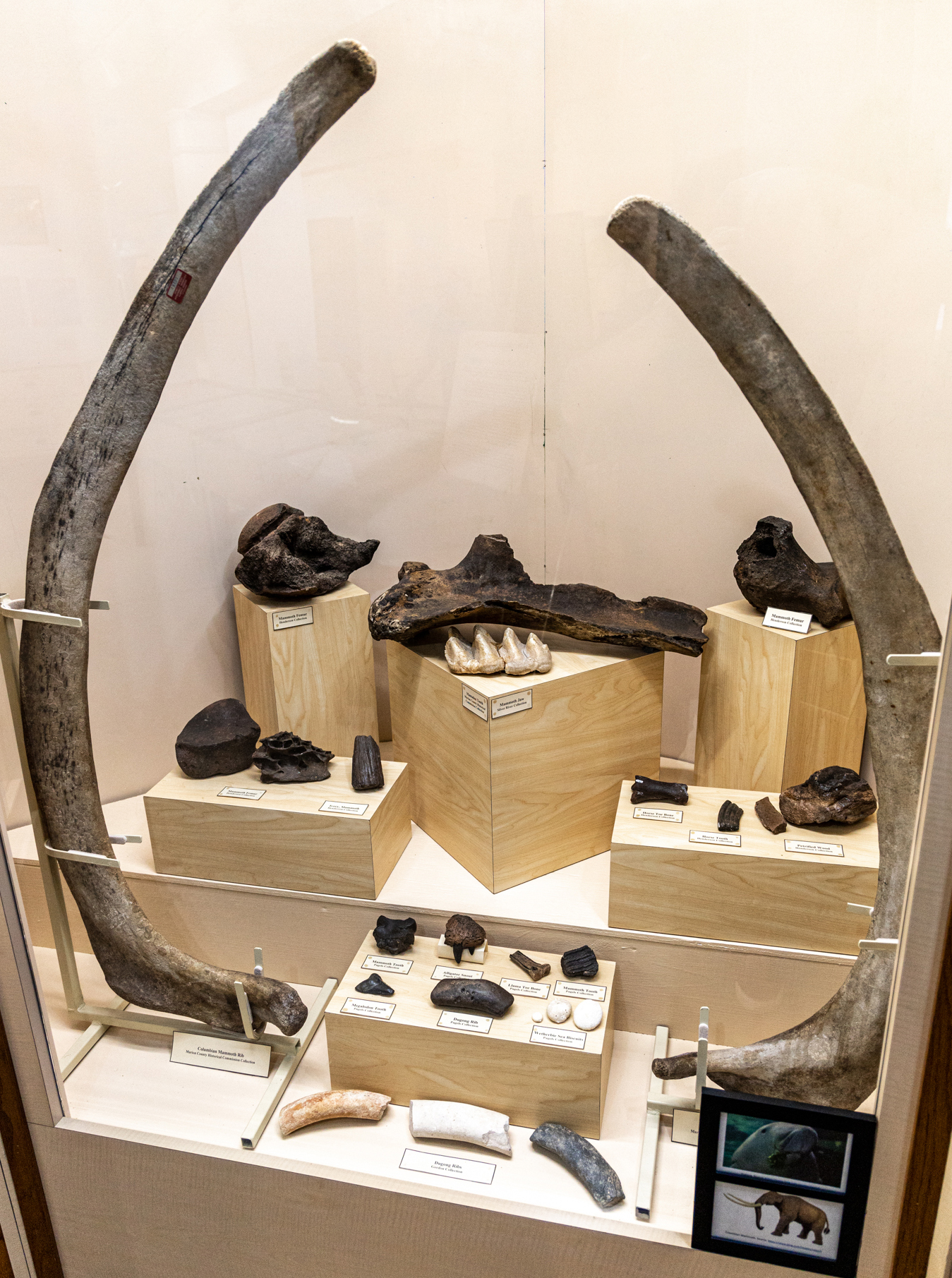
Read and see what Archaeology means to us with pictures of some dig sites:


http://marioncountyarchaeology.com/archaeology.htm

*****************************************************************************
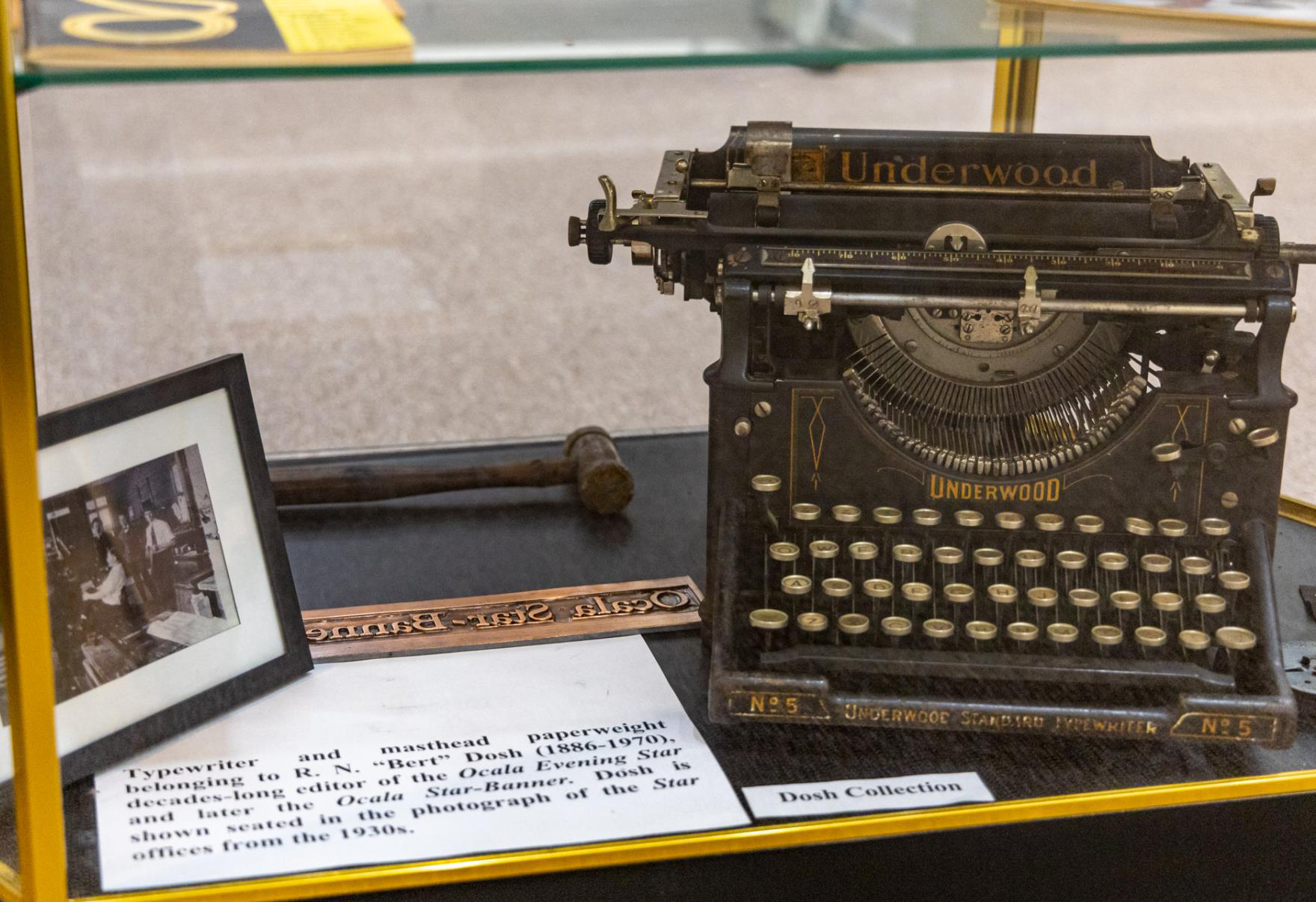
 

A local resident – Robin Corsiglia found many Native American Arrowhead Points and Pottery back in 1961 less than ½ mile from the museum and built a display for these artifacts and set up a web page to explain more about his collection at:


http://marioncountyarchaeology.com/2cor/2corsiglia.htm


Send him a note about your artifacts from Marion County. He would like to see your collection to learn more about our history. We would also like your artifact "donations" or "loans" to the museum for all to see. Robin Corsiglia: Email: steameng1@cox.net


*****************************************************************************
Lectures and Special Projects:

Come to one of our Monthly Lectures at the Museum.  See the lectures schedule and other projects we are working on.


http://marioncountyarchaeology.com/mcmha/lecturesprojects.htm


*****************************************************************************


Contacts:

Museum Curator & Archaeologist &       

Ancient Ones Archaeological Society:   Dr. Willet Boyer        352-260-5762 - landoftherivers@hotmail.com

Marion County Historical Commission:  Vanessa Thomas      352-427-6911  - vthomas@fhm-law.com

Volunteer (at Dig sites & the Museum): Robin Corsiglia        352-804-4690   - steameng1@cox.net

***************************************************************************************************************
Potential Team Members being contacted to help support our Museum:

1.     Ocala Chamber of Commerce: http://www.ocalacc.com/

2.     Silver River State Park Museum: http://www.marion.k12.fl.us/district/srm/index.cfm

3.     Silver Rive State Park: http://www.floridastateparks.org/silverriver/

4.     Ocala Kiwanis Club:  http://www.ocalakiwanis.org/

5.     Ocala Rotary Club: http://ocalarotaryclub.com/

6.     College of Central Florida: http://www.cf.edu/

7.     Appleton Museum: http://www.appletonmuseum.org/

8.     Ocala Recreation and Parks: http://RecreationandParks.ocalafl.org

9.     Ocala Historic Preservation Advisory Board (OHPAB): http://ocalafl.org/COO3.aspx?id=331

10.  The Marion County Genealogical Society:  http://www.historicocala.org/

11.  Ocala Historical Preservation Society (HOPS): http://www.historicocala.org/

12.    Public Communications: http://ocalafl.org/COO3.aspx?id=327

13.    Retiree’s Corner: http://ocalafl.org/COO3.aspx?id=1820

14.    Ocala City Manager Office: http://ocalafl.org/COO3.aspx?id=433< /A>

15.    Marion County Board of County Commissioners: http://www.marioncountyfl.org/

16.   Ocala City Council: http://www.ocalafl.org/COO3.aspx?id=525

17.   Marion County Public Schools:  http://www.marion.k12.fl.us/

18.   Marion County Public Library System:  http://www.marioncountyfl.org/library/hoursandlocations.aspx

19.  Silver Springs: http://www.silversprings.com/

20.  Marion County: http://www.ocalamarion.com

21.  Ocala / Marion County Economic Development Corporation: http://www.ocalaedc.org

22.  Ocala Magazine: http://www.ocalamagazine.com  

23.  Ocala Style Magazine:  http://www.ocalastyle.com

24.  FloridaTrend Magazine: http://www.floridatrend.com/Florida

25.  Florida Carriage Museum & Resort: http://www.fcmr.org/wordpress/

26.  Florida Public Archaeology Network:  http://www.flpublicarchaeology.org/

27.  Ancient Ones Archaeological Society of North Central Florida: http://ancientones.weebly.com/index.html